Experience 30-minute Issue Coaching session
Category

entrepreneurs

""/
Action plan, business plan, entrepreneurs, failure, Marketing, Risk, small business, start up, Strategic Plan

Turn Your Hobby Into A Business


After watching the video, create a worksheet.

Jot down notes and answer these questions:
Did you begin?
1. What stopped you?

  • Fear
  • Lack of confidence
  • Influence of others
  • Your __________

2. Define your strategic plan in three sentences.

  •     Define your objectives within your plan
  •     Define your goals within your plan


3. How solid are your resources?

  •     Credit cards? (Hint: Bad idea)
  •     Small business loan
  •     Savings
  •     401 (k)  
  •     Other

In what stage is your business plan?

  • Would you invest in this idea if you were a stranger?
  • Write out 10 single key words to describe your enterprise.
  • Write out 10 ways people would search in phrases (long-tail SEO) for your offering.
  • Who are two competitors in your channel?
  • What do you know about them? Write what you know and then research them.
  • What are three unique characteristics of your offering different than two competitors?
  • What is the worst thing that could happen to your business?
  • What is the best thing that could happen to the business?
This sheet will help you get started—Do it today!

Who needs coaching? Maybe you do to get this starship launched!

Your coach,
  CPCC, ACC
Positive Potentials LLC


©2015  Michelle Cubas All Rights Reserved.


http://feeds2.feedburner.com/blogspot/qDYb
c7e4232e6ad5e385652b43c83aeae033-1331863127
Action plan, career, coaching, Creative, entrepreneurs, Marketing, Strategic Planning, Visionary, Wisdom

Is entrepreneurism a gene or skill?

So, what if you aren’t born with the entrepreneurial qualities?

Recent findings and emphasis on personal development show that people can learn an entrepreneur’s (E’s) progressive traits and can borrow on E’s native talents.

There are several entrepreneur types that bring different strengths and experience while they learn new skills. This is a list of Positive Potentials LLC’s2 observations from serving E’s across two decades of business coaching:

1.    The Widget Maker—This type is often mistaken as a classic entrepreneur. These proud, diligent people are adept at doing one thing well—making widgets—Widgets are products and methods that can range from baking cookies to custom car production. The outcome is something they have perfected and want to take to market—They want to reproduce it and sell it. Although they may have no real business sense or experience, they forge ahead, often without a business plan, and launch their idea until they run out of money or personal energy.
Another E in this category is the Episodic E, who may be, for example, a car mechanic.  S/He sees an opportunity to work on windmill turbines and opens a “green” shop or a former shoe sales person starts a boutique. They work on what they know within a comfort zone. Sometimes, they have little awareness of the moving parts of a business because they only focused on their part in it. These E’s must add business skills and hire talent especially if migrating from a non-business field like a mechanical environment.
They are comfortable and adept with their skills, limited by what they know, but may not take time or fear advanced training so they move from one episode to another as part of a long learning curve. Their shops can be chaotic and may waste resources, because they do not have a plan or marketing skills. For example, lawyers and doctors are historically inexperienced business people.
2.    The Innovator—This E likes to tinker. These are not people who want to open a storefront; they want to “build a better mousetrap.”  Often, they will consider selling their idea to Wal-Mart, but do not know how to protect and secure their idea with registered patents or how to attract investors.
They are focused on continuous improvement often coming from a manufacturing or systems background. They believe “necessity-is-the-mother-of-invention,” and use their creativity to solve problems. They are creative people because they see and love how things work.
3.    You’re Fired —This is the reluctant E. Today’s uncertain economic and job climate can create this type of entrepreneur, because they may not have chosen to leave but they were downsized. They gather severance, savings and gumption in an attempt to duplicate the job they just lost.
Their perspective is limited because they only see a tiny part of the working business. This E requires support people to draft a written business map to keep the E on course and add talent to fill in the gaps.
4.    The Last Hurrah—”If not now, then when” logic? Often a mid-life crisis triggers this E, who is restless and sees a last shot at a long-held dream. For example, in the 1990’s, while the economy was stable, “40-Somethings” saw an opportunity to use their 401k’s to start a business if they resigned.  For example, independent coffee houses and bookstores popped up nationwide from these E’s efforts. They may have had access to other resources through their professional networks, too. The Boomers are classical examples of this type. After the economic downturn, many Boomers found themselves unable to retire, so they are back in the job market and ready to pour their energy into a new enterprise.
5.    Buy A Job/Be Your Own boss—This E is slow to action and can be motivated by fear or external pressure, and a “I’d-better-do-something” attitude. These are ideal franchise prospects or owners. They like a template business model. It appeals to those who want order for security, not creativity. They want the illusion of being their own boss, but, in reality, they are bound by the franchisers rules with little flexibility to improvise.

They may hire people to organize offices and billing issues so they do not get bogged down with the details. The good news for them is they can better manage their process adopting E traits. Learning offers them a better degree of competence to check the work of others they hired without being an entrepreneur.
These visionary E’s hold and share a strong mental picture that s/he translates into the support of followers. Their persuasive communication style serves them to sell the dream born out of their passion. An example of this “charismatic selling” is the rise of multi-level marketing companies since 1990 that hype success with images of wealth, fancy cars and exotic travel as payoffs. One must ask what they are really selling.
Importantly, people serving entrepreneurs are wise to understand them and can benefit by teaching them how to marketing, deliver services and hire a lawyer. Service providers who help their E’s achieve their visions, have no loyalty issues, especially when times are tough.
Tip—Identify where the gaps are in your process to start a business. Find support to complete the gaps and write out your plan. The magic begins when you can visualize the outcome and know what resources you need to get started.
A positive first step is to seek out the free programs like at Glendale Public Library for more information www.GlendaleAZ.com/library. Good luck. -MC

Resources

·  Kauffman Foundation       www. KauffmanFoundation.com
·  Malcolm Baldrige Quality Principles— http://www.nist.gov/index.html

·  Entrepreneurship.org,      The Policy Dialogue on Entrepreneurship (PDE)

·  The Phoenix Business Journal, www.bizjournals.com

·  Coaching Programs          EMBA (Entrepreneurial Mastery of Business Assets)

·  ASU Technopolis

·  Positive Potentials’            EMBA Certification Program™

·  Fast Track                        Stealthmode Partners


1 Michael Gerber, The E Myth Revisited, (New York, 1995), pp.19-33.

2 Michelle Cubas, Positive Potentials LLC, https://www.positivepotentials.com, All Rights Reserved, 2000.

http://feeds2.feedburner.com/blogspot/qDYb
c7e4232e6ad5e385652b43c83aeae033-1331863127
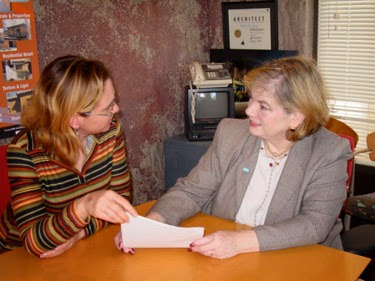
business coaching, entrepreneurs

Entrepreneur Shuffle

Here are several lessons learned along the journey of entrepreneurism:

  • People are limited by what they know. After 13 years in large corporations, I knew I could serve SOHO businesses and entrepreneurs more effectively as my own company. Positive Potentials LLC was born out of that burning desire.
  • Freedom is a personal value for me. It was freedom to make decisions, not free time! When driven by a passion for one’s work, it’s not work (Confucius said that), but the hours can take over one’s life. Time management is a huge challenge.
  • The biggest challenge in starting was to get the word out. Interestingly, people I previously worked with began to hire me because they enjoyed working with me. Marketing was the answer to creating sustainability.
  • I networked morning, noon, and night to create a presence and persona for Positive Potentials. I was able to receive feedback on how people perceived business coaching and where the gaps were in their businesses—I was curious and I did more listening than talking.

Certain truths became self-evident (smile):

Coaching shortens your learning curve—The one with the shortest learning curve LEADS!™

  • People start businesses but run them like a hobby.
  • My clients didn’t have time to go back to school to learn what they needed to know; business coaching filled many gaps for them in the business process from accounting to marketing.
  • Coaching provided a safe, non-judgmental space for quick learning. The information was useful and immediately applicable to the entrepreneur’s issues. I formulated a body of work called the EMBA Program that ultimately became a 12-week certification process for small business owners.
  • The entrepreneurs I coached were great at what they wanted to do. I called them my Widget Makers.

The flip side, though, was they hadn’t a clue how to run a business. With a fierce resistance to hiring expertise, once entrepreneurs connect value to coaching, they love it and welcome the shared experience.

See if you can relate or agree that these are the looming, persistent challenges I found. Please send me your feedback and comments:
• Self-promotion was hard for people.
•    They didn’t budget time and other resources wisely based on a plan; they became reactive to the situations.
•    They wanted to do everything themselves. They perceived it was too expensive to hire experts and found out the hard way how much time and money they wasted with a steep learning curve.
•    Time management was a huge challenge. There was little balance between personal and business.

I would be glad to post and share, with your permission, yours and others’ comments.

Happy Holidays!  -MC
Pass it on . . .
http://feeds2.feedburner.com/blogspot/qDYb
c7e4232e6ad5e385652b43c83aeae033-1331863127
1 2 3 4 5
https://coachcubas.blogspot.com
Enjoy our past posts!
Privacy Settings
We use cookies to enhance your experience while using our website. If you are using our Services via a browser you can restrict, block or remove cookies through your web browser settings. We also use content and scripts from third parties that may use tracking technologies. You can selectively provide your consent below to allow such third party embeds. For complete information about the cookies we use, data we collect and how we process them, please check our Privacy Policy
Youtube
Consent to display content from - Youtube
Vimeo
Consent to display content from - Vimeo
Google Maps
Consent to display content from - Google
Spotify
Consent to display content from - Spotify
Sound Cloud
Consent to display content from - Sound